Assessing the National Surveys for its Representativeness
This paper is a quantitative analysis of the data quality of the National Sample Survey (NSS) in terms of three estimates.

This paper is a quantitative analysis of the data quality of the National Sample Survey (NSS) in terms of three estimates.
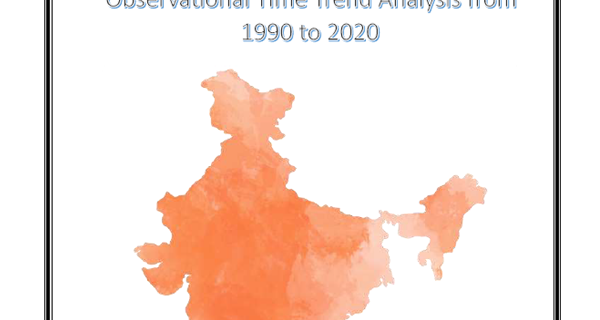
State budgets reflect the state government’s social and economic priorities beyond the political rhetoric in the media. Analyzing time trends and the composition of the revenue, expenditure, and capital outlay can provide valuable insights into how these priorities have evolved for different states in the last thirty years.
India needs an alternative and a self-reliant development model “with Indian characteristics.” The Indian model of growth and development should encourage trade liberalization, but safety nets should be in place to address displacement issues.
Our results indicate that the government is responsive to the needs of the marginalized section of society irrespective of religion, caste, or place of residence, which is an alternative and more robust indicator of strengthening democracy in India.
The concept of a circular economy has gained immense popularity in recent times, as it provides a sustainable solution to the current linear economic model. In a circular economy, resources are kept in use for as long as possible, waste is minimized, and products are designed to be reused or recycled at the end of …

The paper, examines the topic from the perspective of process efficiency and the ability of the system to correct by responding to feedback loops. It delves into areas such as customer complaint rates, responsiveness of the Goods and Services Tax Network (GSTN), time taken for redressal, and the technological tools being used to improve interactions …
Read more “Fixing the GST Process: Five Years of Iterative Problem Solving”
The issue of labeling settlements as “urban” and “rural” has important policy implications in India since the label determines the local governance structure (panchayat or urban local body) and the allocation of resources under government schemes. Policymakers often work on the faulty assumption that “rural” is a proxy for “poor” and accordingly spend greater resources …
India’s poor performance on certain development indicators has been a matter of hot debate in recent years. These debates often arise because some socio-economic indicators, as estimated by international agencies, seem to stagnate or even deteriorate despite a rise in per capita income in India. In this paper, we examine whether or not these estimates …
Enumeration of legislative powers in the seventh schedule of the Indian Constitution has been an important topic in the study of federalism in India. The success of a federation depends on several factors but the accuracy of power distribution is an important one.

The Indian Evidence Act continues to serve as a stable foundation for resolving disputes and protecting rights, but it is also crucial to consider the need for modernization and the evolution of the legal system better to serve the needs of a rapidly changing society.

A codified law of torts would eliminate the need to keep developing new legislation each time a new form of injury or violation occurs.
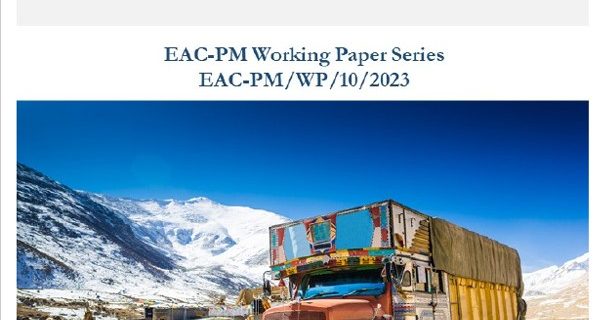
An examination of volume and direction of internal trade in India. While there is an almost unanimous view of the benefits of trade – fueling economic growth, supporting a greater number of and better paying employment, raising living standards and enhancing the consumer surplus with affordable goods and services, contemporary research has primarily looked at …
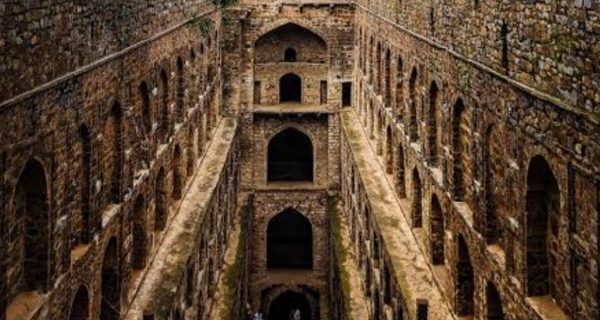
A working paper on reasons for decline and need for revival of water conservation by Sankar Prasad Sarma and Himani Aggarwal.
The Government of India has set up the National Bank for Financing Infrastructure and Development (NaBFID) as the central Development Finance Institution (DFI) for infrastructure financing. The idea is to establish NaBFID as the key DFI which provides financing to infrastructure projects under the broad developmental goals of the country.

As the world, grapples with a host of problems, ranging from inflation and recessions to war and violence, the menace of smuggling and counterfeiting lurks in the underbelly of the economy.